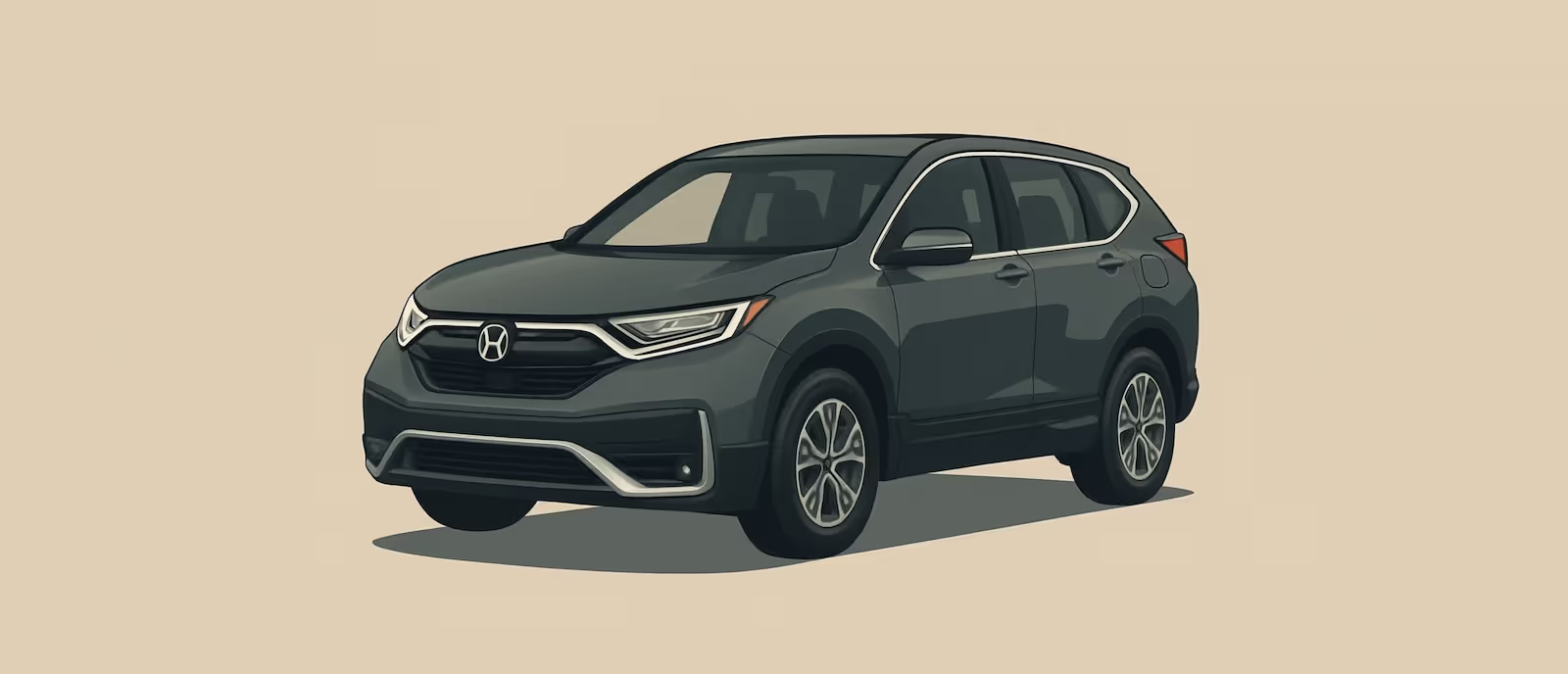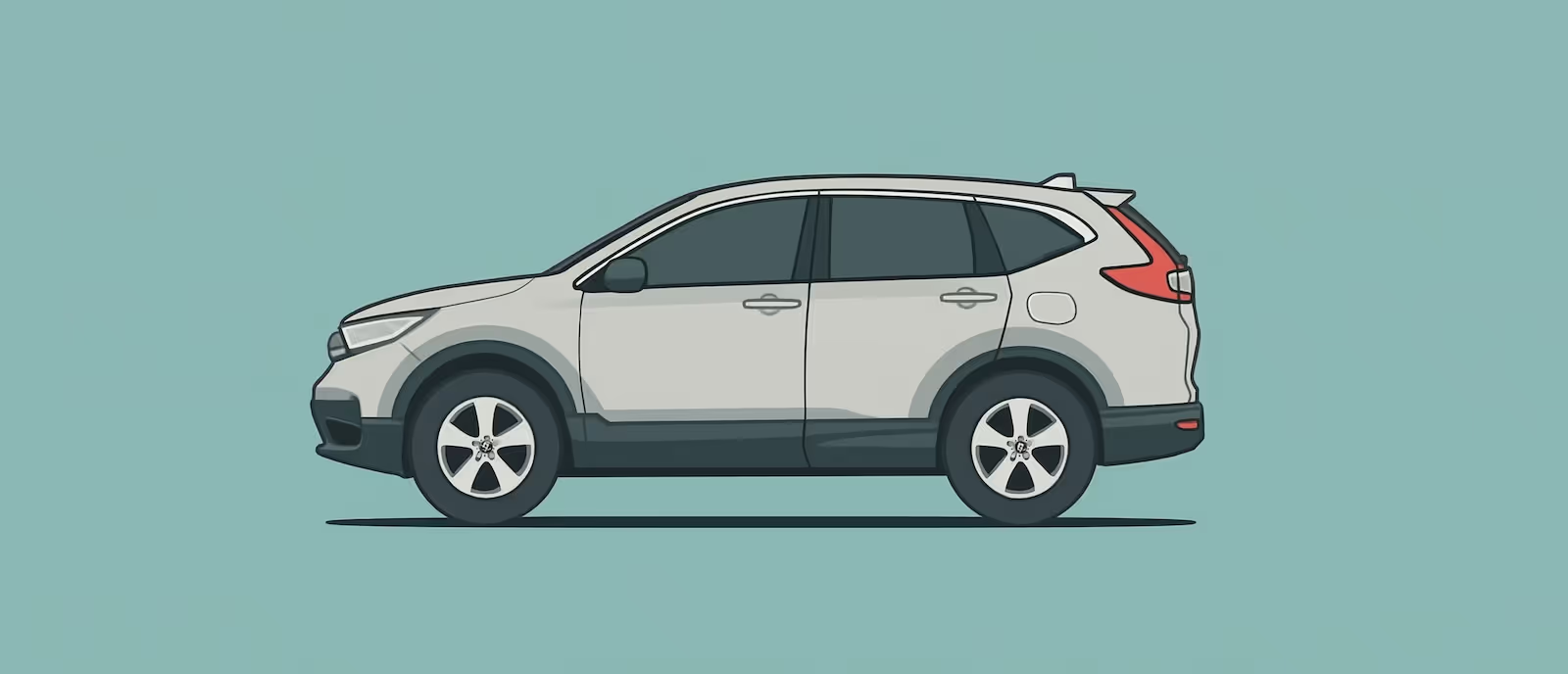
How long can a Honda CR-V last? Of the 16-plus-year-old CR-Vs Canadians bring to Clutch, the typical one shows about 246,000 km. Nearly half have passed 250,000 km and more than one in four has passed 300,000, roughly double the share for the rest of the compact SUV class. No other model in the class matches it; the Toyota RAV4 comes closest. Over the past two years, Clutch has appraised more than 19,000 CR-Vs and over 100,000 other compact SUVs across Canada, and put about 1,360 CR-Vs through its 210-point inspection. Here's what that data says about how far a CR-V goes, what actually fails, and what it costs to keep one on the road.
Vehicle condition insights in this guide come from inspection records logged by Clutch’s reconditioning team.
How many kilometres does a Honda CR-V actually last?
Of the CR-Vs Canadians offer to Clutch at 16 or more years old, the typical one has about 246,000 km on it. Almost half have passed 250,000 km and 27% have passed 300,000. Across the same-age compact SUVs we appraise, those shares are 35% and 14%. The CR-V leads the class at every age, with the RAV4 the only model that keeps pace.
| Age of vehicle | Typical km (CR-V) | Past 250,000 km: CR-V | Past 250,000 km: class average | Past 300,000 km: CR-V | Past 300,000 km: class average |
|---|---|---|---|---|---|
| 10 to 12 years | 185,000 | 18.2% | 13.9% | 6.3% | 4.5% |
| 13 to 15 years | 213,000 | 30.6% | 22.8% | 12.7% | 7.9% |
| 16+ years | 246,000 | 48.6% | 35.2% | 26.8% | 14.1% |
Customer-declared mileage at appraisal, past 24 months. Sampling margins are under ±2 points on every figure shown.
The oldest CR-Vs tell the story best: half the 2005 to 2009 CR-Vs Canadians bring us has already passed 250,000 km, and more than one in four has passed 300,000. Drivers put similar distance on every model in this class, around 16,000 to 18,000 km a year, so the gap above is wear tolerance, not driving habits.
One honest caveat. These are the CR-Vs people offered to sell us, not every CR-V ever built. We can't count the cars that never come up for sale. What we can say is that within the same stream of vehicles, measured the same way, the CR-V sits at the top in every age band.
Is a CR-V with 100,000 km still worth buying?
Usually, yes. Between 80,000 and 120,000 km, CR-Vs clear Clutch's 210-point inspection about 86% of the time, against 79% for the rest of the class. Held to the same age and mileage, a CR-V fails our inspection at roughly half the rate of the class's domestic and Korean rivals, the best result of any model we buy. It even holds that lead past 120,000 km, where most of the class falls away.
| Mileage when we buy the vehicle | CR-V pass rate | Closest Japanese rivals (RAV4, CX-5, Forester) | Rest of class |
|---|---|---|---|
| Under 40,000 km | 98.5% (96.2 to 99.4) | 97.1% (95.6 to 98.1) | 96.5% (95.4 to 97.3) |
| 40,000 to 80,000 km | 92.9% (90.4 to 94.8) | 93.7% (92.1 to 95.1) | 89.8% (88.5 to 91.0) |
| 80,000 to 120,000 km | 86.3% (82.8 to 89.2) | 85.2% (82.6 to 87.4) | 78.9% (77.1 to 80.6) |
| 120,000 to 160,000 km | 82.9% (75.3 to 88.5) | 75.3% (68.5 to 81.0) | 64.5% (60.4 to 68.4) |
Share of vehicles bought for retail that pass the 210-point inspection, Clutch purchases since 2023. Ranges in brackets are 95% confidence intervals. Competitors are grouped, not named with individual rates, per our reporting rules.
Two things worth saying plainly. In the 40,000 to 80,000 km band, the CR-V and its Japanese rivals are a statistical tie, so don't pay a premium there for the badge alone. And our inspection data covers vehicles up to about 10 years old, because Clutch doesn't retail vehicles beyond that age. For how far the older ones keep going, the mileage table above is the evidence.

What actually fails on a used CR-V?
Rarely the things that wear out. In the inspection notes our mechanics log on every rejected vehicle, worn suspension shows up on about one in fifteen rejected CR-Vs, the lowest share in the class. What sinks a CR-V instead is what happened to it: a prior accident repaired poorly, structural rust hiding at the rear trailing-arm mounts, or an engine fault from the first turbo years, 2017 and 2018.
| What our mechanics find on rejected CR-Vs | How often | What it looks like |
|---|---|---|
| Engine faults, mostly 2017 and 2018 | Common | Misfires, rough idle, clusters of warning lights on the dash |
| Prior accident or poor repair | Common, the class's highest share | Panels repainted or refit poorly, wheel alignment that points to subframe damage |
| Leaks | Common | Oil seep, corroded air-conditioning lines |
| Structural rust | Occasional but decisive | Rotted rear trailing-arm mounts on 2016 to 2018 cars, sometimes found only once repair work starts |
| The economics call | Occasional | Nothing major is broken, but the repair list costs more than the price of the car supports |
| Worn suspension | Rare, the class's lowest share | The usual reason a compact SUV fails our inspection, but not this one |
Engine and transmission problems together account for about one in seven rejected CR-Vs; among rejected compact SUVs outside the Japanese group, powertrain problems account for roughly one in four. So the CR-V buyer's checklist looks different from most used SUVs. Before you buy:
- Read the vehicle history first. A CR-V with a clean past is usually a sound car, so a repaired collision is the biggest single risk, and it's the easiest to rule out.
- Look along the panels in daylight for paint mismatch, uneven gaps, or overspray, the signs of a cheap repair.
- Get underneath, or have a shop do it, and look at the rear trailing-arm mounts for rust. On 2016 to 2018 cars, it's the check that matters most.
- On a 2017 or 2018, start it cold and let it idle. Walk away from a rough idle, a misfire, or a dashboard lighting up with warnings.
- Run the air conditioning until it blows properly cold. Corroded lines are a quiet, expensive repair you won't see coming.
What does it cost to keep an older CR-V on the road?
Less than the class, at every age. On the vehicles Clutch reconditions for retail, a CR-V's reconditioning bill runs below the class median whether we buy it at three years old or ten. It'll still need work at high mileage like anything else. It just needs less of it, and that's exactly why so many are worth fixing at all.
And the honest close a CR-V shopper deserves. Once a vehicle has passed the 210-point inspection and been reconditioned, our post-sale records show CR-Vs generate protection plan claims at about the same rate as the rest of the class. We checked it two ways, among all buyers and among buyers with a plan, and the answer didn't change. The CR-V's real edge is in the odds that the specific car you're looking at is still sound. After reconditioning, it's a reconditioned car. Buy the car, not the badge.
Which used CR-V years are the best buy?
2019 and newer. The 2017 and 2018 cars were the first years of the 1.5-litre turbo engine, and our shop data shows it: they clear our inspection about 84% of the time, and the ones that fail lean toward misfires and warning-light clusters in the logged notes. From 2019 onward the pass rate settles around 93% and stays there. The 2016s we see are weaker still, though we don't buy enough of them to publish a rate.
| Model years | Share that clears our 210-point inspection |
|---|---|
| 2017 to 2018 | 84% |
| 2019 to 2020 | 93% |
| 2021 to 2024 | 93% |
Part of the 2017 to 2018 gap is simply age and mileage at purchase, so read it as a pattern, not a verdict on any single car. A well-kept 2018 with a clean history can still be a good buy at the right price; it'll just need a harder look first. For year-by-year verdicts and typical prices, see our full guide to the best Honda CR-V years to buy used. Cross-shopping the RAV4? Our RAV4 vs CR-V comparison covers that choice head to head.
How we know
Everything on this page comes from two Clutch datasets, and each one answers a different question. Neither is perfect, so here's exactly what each covers and where its blind spot sits.
| Dataset | What it is | What it answers | Its blind spot |
|---|---|---|---|
| Appraisals | 19,000+ CR-Vs and 100,000+ other compact SUVs offered to Clutch over 24 months, with customer-declared mileage | How far these SUVs actually get driven in Canada | Only counts vehicles someone decided to sell |
| Inspections | About 1,360 CR-Vs Clutch bought for retail since 2023, each through the 210-point inspection, with logged mechanic notes, reconditioning records and post-sale claims | What condition they arrive in, what fails, and what it costs | Covers vehicles up to about 10 years old, since Clutch doesn't retail older ones |
A few rules we held ourselves to. Every rate on this page sits on at least 50 vehicles; that's why 2016 gets a caution but no number. The mileage tables carry margins under ±2 points. Inspection comparisons hold age and mileage constant before comparing models, so an older-arriving competitor isn't punished for its age. Competitor results appear as group bands, never as a named rival with a rate.
The findings that cut against the CR-V stayed in: the 40,000 to 80,000 km band where it ties rather than leads, and the post-sale claim rates that show no CR-V advantage after reconditioning. The failure-cause themes come from the inspection notes our mechanics log during the 210-point inspection, spot-checked against sampled vehicles, rather than a formal engineering study, so treat them as what our shop sees, not a defect census. For how every brand performs across our whole inspection program, see the Clutch Used Car Reliability Report.
Thinking of buying a used CR-V?
The data says the CR-V has earned its reputation better than any SUV in its class, and it also says the risk lives in the specific car's past, not the badge. Browse Clutch's Honda CR-V listings to shop ones that already passed the 210-point inspection, with the history checked for you. Every vehicle comes with a free CARFAX report, a 10-day money-back guarantee, and optional Protection Plans, so the specific car you buy is the sure thing.
FAQs About How Long Honda CR-Vs Last
How long do Honda CR-Vs usually last?

Of the 16-plus-year-old CR-Vs Canadians bring to Clutch, the typical one shows about 246,000 km, and more than one in four has passed 300,000 km, the strongest result in its class. High mileage is normal for a well-kept CR-V; the specific car's condition and history matter more than the odometer.
Which CR-V years should I avoid?
Be most careful with 2016, and treat 2017 to 2018 as inspect-first buys. The oldest CR-Vs miss our retail standard far more often than 2019 and newer. There's no specific defect to dodge; the risk is unknown maintenance history on an older car.
Is it worth buying a CR-V with over 200,000 km?
Yes. If it has a clean service history and no major rust or accident damage. A well-maintained high-mileage CR-V can still offer years of dependable driving.
What’s the best way to make a CR-V last longer?
Follow the service schedule and protect the underbody from winter rust. In the inspection notes our mechanics log, the rust that takes a CR-V off the road forms at the rear trailing-arm mounts, so regular underbody washing through winter and a yearly look underneath are the highest-value habits.
.avif)